Training that becomes skill.
AI turns a plant's existing SOPs into step-by-step guidance on display glasses. People approve every procedure, the worker runs it hands-free on the real job and every step is recorded.
A founder with 10 years in enterprise XR, on a brand-new platform.
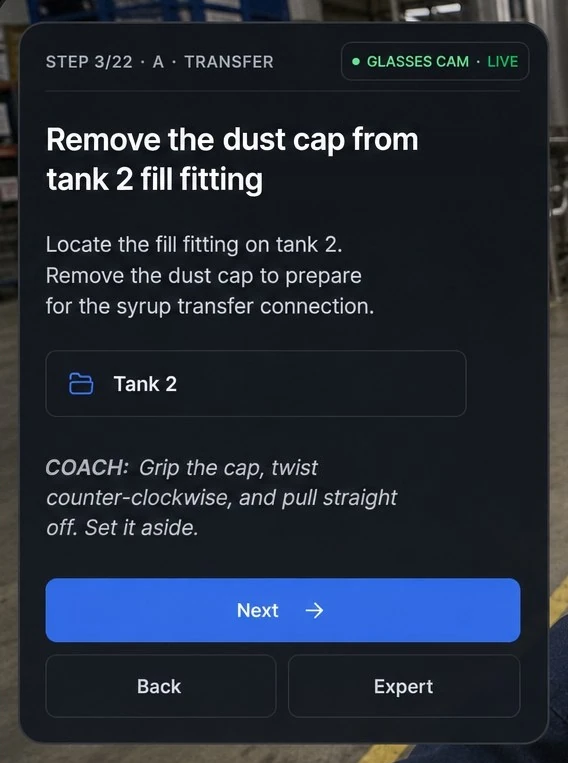

People watch. They don't do. So it never becomes skill.
Slides, videos, modules: most training is still watched, not performed. It drains money through lost productivity, errors, rework and turnover.
In safety-critical work, manufacturing, food and beverage and warehousing, an untrained worker isn't just a cost. It's a hazard.
in lost wages and productivity, medical expenses and administrative costs from U.S. work injuries in a single year.
Training is leaving the screen and the simulator.
The Screen
Slides, videos, LMS modules. You watch and click through. Passive, and forgotten fast.
The Headset
VR simulation. You finally do the task, but inside a simulated room, away from the real job.
The Glasses
AI display glasses. You do the real task, on the real job, hands-free, coached in the flow of work.
Each step closes the gap between learning and doing. Glasses close it completely.
An AI coach that sees the work, and verifies the skill.
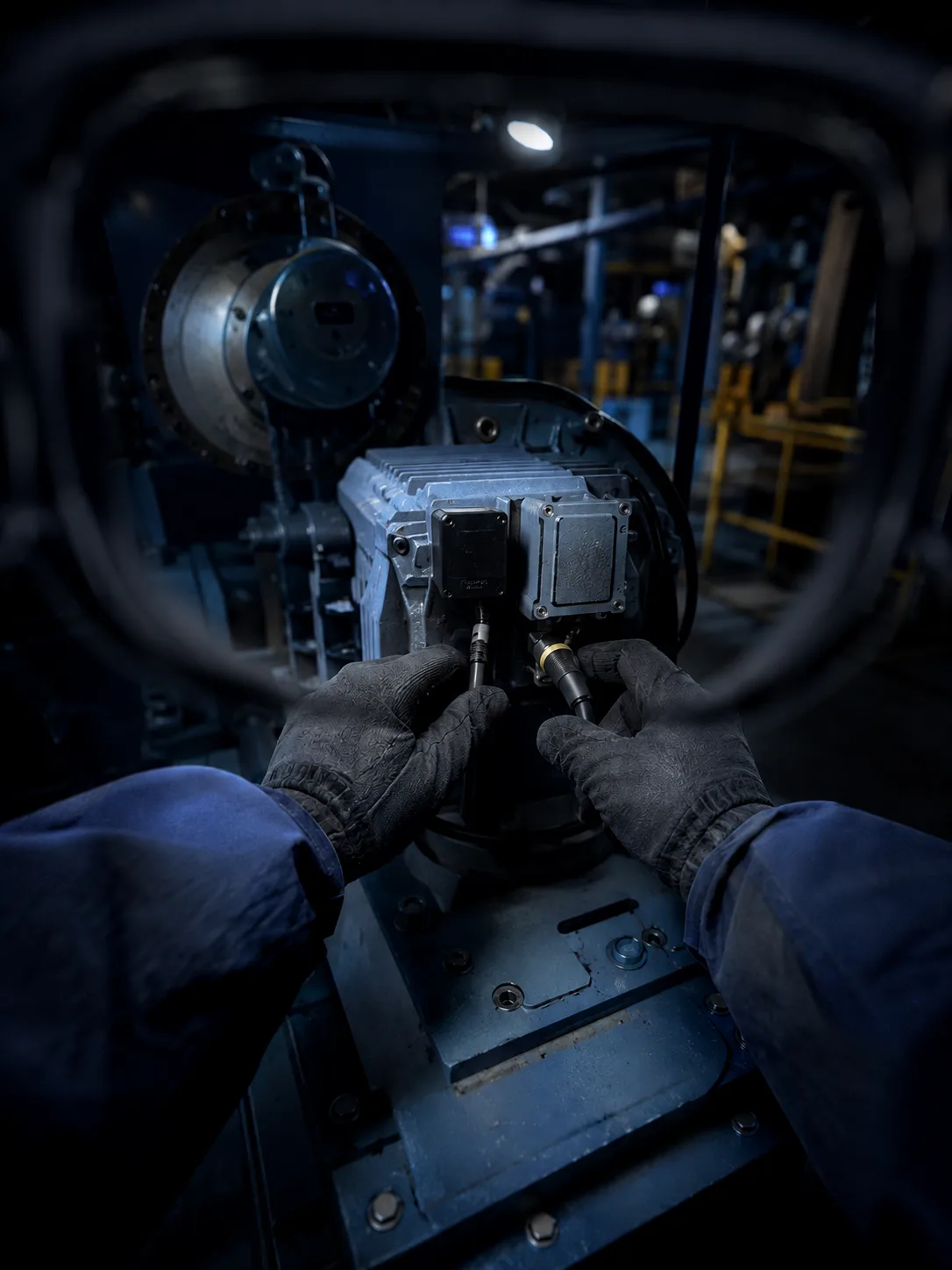
The AI coaches. People stay in control.
In safety-critical work, what the system may do is set in code, not left to a model.
Only approved procedures run and the step engine gates every advance in code.
The AI never clears a hazard.
Hazard steps always wait for a supervisor: a person, not the model.
The system guides; it never touches equipment.
Three ways guidance shows up on the job.
Post-Training Field Reinforcement
After VR or classroom training, workers get on-the-job prompts and step guidance that lock in what they learned, right when they first perform the task for real.
Remote Expert Assist
A senior expert sees what the worker sees and guides them through complex or rare procedures from anywhere, cutting travel and downtime.
Real-Time Hazard Identification
On the roadmap: the glasses camera flags risks like missing PPE, live equipment or unsafe positioning before incidents happen.
The glasses guide the worker. The workspace runs the plant.
Every run, checkpoint and sign-off lands in one place. It's what the buyer pays for, and it's built.
Push a procedure to a crew, a shift or one worker. See who is in a run, live.
At checkpoints the worker submits a photo and a supervisor reviews it against the approved reference.
Every completed step becomes a timestamped record with the operator, the device and the result.
Not a concept. Running on the glasses today.
Built on the Meta Wearables Device Access Toolkit within weeks of display access opening: step-by-step guidance on the lens, paired with a full iOS companion app. One 22-step guided procedure is live on-device right now.
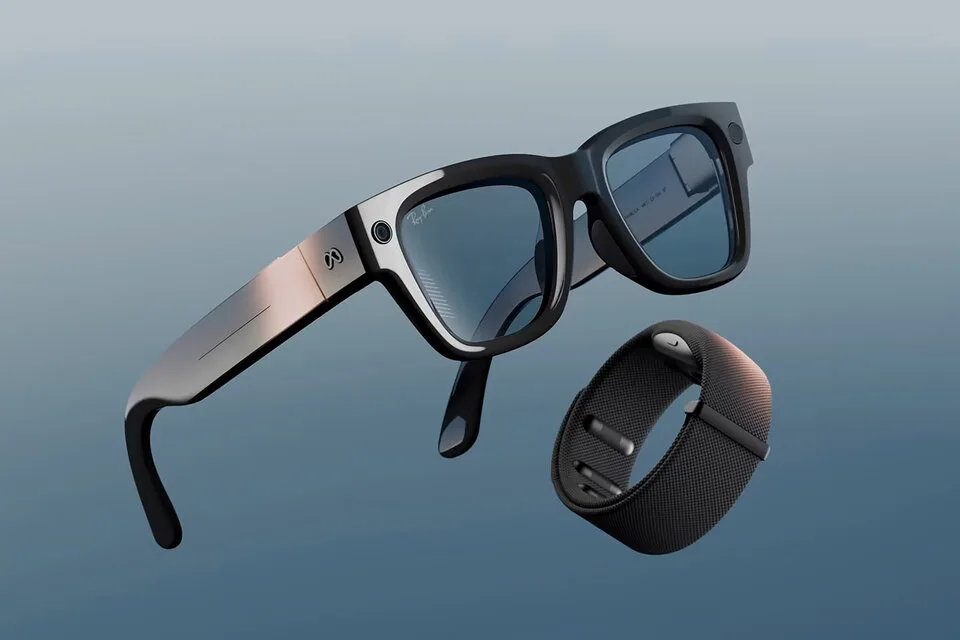
Meta Ray-Ban Display + Neural Band, running a 22-step guided procedure today.
The platform just opened. The first-mover window is open right now.
On May 14, 2026, Meta shipped display support in the Wearables Device Access Toolkit, the first time developers can build guided, camera-aware experiences for Ray-Ban Display glasses. (Meta for Developers; Device Access Toolkit 1.0, Sep 2026)
Device-agnostic by design. The coaching engine (camera in, guidance out) runs wherever the category goes: Meta today; Xreal and Android XR next. We start in environments that don't require intrinsically safe hardware, so deployment never waits on hazardous-location certification. Meta is the wedge, not the dependency.
The model already works.
Documented across 100+ VR Vision deployments in energy, utilities, manufacturing and automotive. The glasses don't change whether immersive training works; they change how far it can reach.
These results validate immersive training, not the glasses product. That proof comes from the paid pilots this round funds.
Coca-Cola: a 2024 sanitization training proof of concept on Meta Quest 3, delivered at VR Vision, with a public testimonial from The Coca-Cola Company's Sr. Director of Global Innovation. Read the case study ↗
PwC found VR-trained employees learn 4× faster than classroom and are 275% more confident applying skills. (PwC, 2020)
Not my first deployment. Ten years of it, on a brand-new platform.
Skill Reality Inc. is a separate company, founded by Lorne Fade, a co-founder of VR Vision. Same operator, new platform, wider scope.
From proven headset programs to AI coaching at scale.
100+ enterprise deployments across Fortune 500 clients, delivered at VR Vision: the proof the model works.
Paid enterprise pilots delivering measurable safety and speed-to-competency data.
Guided task overlay + on-the-job skill confirmation, hands-free. First enterprise training on the new platform.
Generative, self-adjusting guidance and enterprise-wide skill analytics across every frontline role.
The performance layer for the physical workforce.
Skill Reality turns any expert procedure into live, hands-free guidance, so a first-week hire can perform like your most experienced operator. Training was step one. This is the system the frontline runs on.
One founder. Ten years of enterprise XR. Shipping on the new platform.

Raising a $2M seed round.
$2M to turn our first LOI into a paid pilot, put 3–5 paid pilots live by H1 2027 and have customers authoring their own procedures. That's 20–24 months of runway, and two-thirds of it builds product. The full picture is in the deck.
We're raising a $2M seed round.
Request the deck and we'll send it directly, or write us at hello@skillreality.com.
Shape the product as a design partner.
Limited pilot slots for 2026.